


Weitere Informationen zur Filmvorführung hier

Am Sonntag, dem 14. Dezember 2025 ab 16 Uhr (Achtung: Der Termin wurde vom 7. auf den 14. Dezember verschoben!)
Ort: Immanuelgemeinde, Gemeindehaus, Immanuelkirchstr. 1a (Ecke Prenzlauer Allee), 10405 Berlin (Tram M2 bis Knaackstr. oder M4 bis Hufelandstr.)
Wir laden herzlich zum gemeinsamen Kochen und Essen mit Fidan Aghayeva-Edler und Julia Mostova-Schwartz ein und freuen uns darauf, mit der Rabbinatsstudentin Paige Harousedas erste Chanukka-Licht zu zünden.
Wir bitten um Anmeldung bis 11. Dezember 2025: bet.debora@gmail.com oder talin.bahcivanoglu@berlin.de
Fidan Aghayeva-Edler wird mit uns die aserbaidschanischen Nationalgerichte Pilaw (Plov), Sabzi-Govurma und Kükü zubereiten. Pilaw (Plov) ist ein Reisgericht, das oft bei Hochzeiten und Feiertagen serviert wird; Sabzi-Govurma ein reichhaltiger und aromatischer Eintopf, Kükü eine schnittfeste Eierspeise, bei der Kräuter mit Ei vermengt und wie ein Omelett gegart werden.
Julia Mostova-Schwartz wird mit uns Latkes (Kartoffelpuffer – eine traditionelle Speise zu Chanukka), Rote-Bete-Salat mit Walnüssen und Bliny mit Quarkfüllung und Kirschkompott kochen.
Alle Gerichte sind vegetarisch.
Fidan Aghayeva-Edler ist Pianistin und Performerin. Sie kommt ursprünglich aus Aserbaidschan und lebt seit 2012 in Berlin. www.aghayeva-edler.de
Paige Harouse ist Masorti-Rabbinatsstudentin am Abraham Joshua Heschel Seminar in Potsdam. Sie engagiert sich für mehrere jüdische Bildungsangebote und gestaltet u.a. Kinderprogramme und Shiurim für Erwachsene in der Synagoge Fraenkelufer. Sie ist auch Teil des Teams des Festival of Resilience von Hillel Deutschland. Seit 2019 ist sie Wahlberlinerin.
Julia Mostova-Schwartz, geboren 12.05.1980 in der Ukraine, ist Grafikdesignerin, dreifache Mutter und zertifizierte Food Coach. Sie teilt ihre Leidenschaft für das Kochen auf einem kulinarischen Blog und in sozialen Medien. Als Kursleiterin an der Kochschule Food Atlas gibt sie ihr Wissen weiter und bietet in der Jüdischen Gemeinde zu Berlin Kurse zur jüdischen und israelischen Küche an, die sie kreativ und mit Freude vermittelt.

Wir laden herzlich zu einer Gesprächsrunde im Rahmen unserer Veranstaltungsreihe „Miteinander sprechen, voneinander lernen: Dialog in herausfordernden Zeiten“ am Sonnabend, dem 8. November 2025 um 19 Uhr ein.
Ort: Stadtteilzentrum Prenzlauer Berg (ehemaliges Jüdisches Kinderheim), Fehrbelliner Str. 92, 10119 Berlin-Prenzlauer Berg ein.
Die Veranstaltung findet in englischer Sprache statt.
Wir heißen alle Interessierten herzlich willkommen! Der Eintritt ist frei.
An Evening of Encounter: Dr. Abeer Khshiboon (Humboldt University, Berlin), scholar of religion and memory, and Rabbi Avigail Ben Dor Niv, researcher on femininity in the Talmud, come together for a conversation about our mothers in the Bible and the Quran.
We will explore the common mothers of our religions; reconstruct their worlds through the deafening silence of their history, rethink the pillars of our faith with and through them and reconcile through a maternal language.
Dr. Abeer Khshiboon, Palestinian scholar, born in Haifa, holds a master degree in Jewish Theology from the University of Potsdam and a PhD in Religion and Culture from Humboldt University of Berlin.
Rabbi Avigail Ben Dor Niv serves as the rabbi of the liberal community Migwan in Basel, Switzerland. She holds a Bachelor’s degree in Philology from Tel Aviv University and the FU, Berlin, and a Master’s degree in Theology from the University of Potsdam. Her writings explore female representation in Talmudic literature.

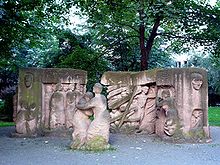
Der Initiativkreis und die Ständige Konferenz der NS-Gedenkorte im Berliner Raum laden Sie und Ihre Freund:innen zur Gedenkveranstaltung am Donnerstag, dem 27. Februar 2025 ab 16 Uhr ein.
Am 27. Februar 1943 – vor 82 Jahren – fand im Deutschen Reich die »Fabrik-Aktion« statt, bei der Tausende Jüdinnen und Juden an ihren Zwangsarbeitsstätten verhaftet und anschließend nach Auschwitz deportiert wurden. In Berlin waren auch viele in sogenannter Mischehe Lebende darunter, die im Sammellager Rosenstraße 2–4, dem ehemaligen Wohlfahrtsamt der Jüdischen Gemeinde zu Berlin, inhaftiert wurden. Als ihre Angehörigen erfuhren, wo sie sich befanden, versammelten sie sich vor dem Gebäude. Es waren vor allem Frauen und Kinder, die dort tagelang ausharrten – bis zur Freilassung der Festgenommenen.
Am Ende der Gedenkzeremonie werden Blumen vor der Skulptur von Ingeborg Hunzinger
niedergelegt. Bitte bringen auch Sie auch eine mit! Herzlichen Dank!
PROGRAMM
16.00 Uhr
Anschließend: Schweigemarsch zur Rosenstraße
16.15 Uhr
Gedenkfeier vor der Skulptur von Ingeborg Hunzinger, Rosenstraße, Berlin-Mitte
Musikalische Umrahmung durch den Chor des Jüdischen Gymnasiums Moses Mendelssohn
Mit freundlicher Unterstützung des Instituto Cervantes Berlin
Initiativkreis: Anne Frank Zentrum, Berliner Vereinigung der Verfolgten des Naziregimes – Bund der Antifaschistinnen und Antifaschisten (VVN-BdA), Bet Debora e. V., Bezirksamt Mitte von Berlin, Deutsch-Israelische Gesellschaft, Deutscher Juristinnenbund e. V. (Landesverband Berlin), Frauenarbeit der Ev. Kirche Berlin-Brandenburg-schlesische Oberlausitz, Frauenseelsorge im Erzbistum Berlin, Gedenkstätte Stille Helden, Gegen Vergessen – Für Demokratie e. V., Israelitische Synagogen-Gemeinde (Adass Jisroel) zu Berlin, Jüdische Gemeinde zu Berlin, Ständige Konferenz der NS-Gedenkorte im Berliner Raum, Stiftung Neue Synagoge Berlin – Centrum Judaicum, Stiftung Zurückgeben, Überparteiliche Fraueninitiative Berlin – Stadt der Frauen e. V.
Die Zeremonie ist anschließend auf www.orte-der-erinnerung.de/aktuelles abrufbar. Wenn Sie an der Gedenkveranstaltung teilnehmen, stimmen Sie zu, dass Foto- und Filmaufnahmen von der Ständigen Konferenz der NS-Gedenkorte im Berliner Raum und dem Initiativkreis veröffentlicht werden dürfen.
was born in New York and raised in Buenos Aires, Argentina, where she earned a Masters degree in Architecture from the University of Buenos Aires.
Her professional experience includes work in Argentina, the United States and Spain.
Since 1991 she has lived in Barcelona, where she was a founding member of ATID, the Masorti Jewish Community. Since 1999 she has been dedicated to the study, preservation, dissemination and advocacy of Jewish Heritage. Listen to the podcast with Dominique Tomasov Blinder …
More information about Dominique Tomasov Blinder’s activities and research:
e-mail tomasovd@gmail.com
Urban Cultours project: online-sessions with Dominique about Jewish history of Barcelona available!
Research of ancient cemetery limits (in English): Middle Ages Jewish cemetery in Barcelona.in English and Spanish: www.urbancultours.com/montjuic
Center of Studies Zakhor: www.zakhor.net
Facebook weekly postings about everything Jewish in Barcelona and Spain
Alice Shalvi: Scholar, Feminist, Educator and Peace Activist
Alice Shalvi did not only make a remarkable career as a university teacher, but also as an educator and activist. Her biography also reflects the development of feminist activism in Israel.
Alice Shalvi was born in 1926 in Essen/Germany to an orthodox Galician family. In May 1934 her family had to flee to Great Britain where Alice grew up. In 1944 she was one of the few women students in Cambridge ¬– a particularly impressive achievement for a Jewish girl. After finishing a BA in English literature Alice Shalvi moved to the London School of Economics and completed an MA in Social work. As an ardent Zionist she wished to apply her skills as a social worker to help integrate Holocaust survivors into the society of the Jewish state. However, when she immigrated to Israel in late 1949 she found no job as a social worker. Instead, she was offered a position in the English department of the Hebrew University. She taught there for forty years until her retirement in 1990. In 1950 Alice married Moshe Shelkowitz, an immigrant from the US. The couple later changed their name to Shalvi. Their six children were born between 1952 and 1967. Alice Shalvi could make her remarkable career because her husband Moshe was not only a supporting partner, he was also a true feminist. Being an editor and publisher of reference books he initiated the ground-breaking “Jewish Women: A Comprehensive Historical Encyclopedia“. Editors were Paula Hyman and Daliah Ofer who were assisted by Alice and Moshe Shalvi. The Encyclopedia was published in 2006.
Feminist Awakening and the Beginning of Women’s Studies
Alice Shalvi’s career as an academic was very successful: she taught in the English department of the Hebrew University and in 1969 established the English department at the newly founded University of the Negev in Beer Sheva (since 1973 Ben Gurion University of the Negev). However, when in 1973 she wanted to apply for the position of Dean of Beer Sheva University, she was told that she did not have a chance – because she was a woman. Back at the Hebrew University in Jerusalem she talked to women colleagues who on one hand had made respectable careers, but on the other hand had all experienced discrimination in promotions. What was most shocking for them was the revelation of widespread sexual harassment at the university. When the women presented data concerning their discrimination to the Rector of the University he was sympathetic and promised improvements. Still, the women were too embarrassed to raise the topic of sexual harassment. In 1998 the “Prevention of Sexual Harassment Law” was issued. In 2011 Moshe Katsav, former president of Israel, was sentenced to seven years in prison for rape and sexual harassment.
Another lasting result of this new consciousness of the women academics was the development of Women’s Studies. The newer universities in Tel Aviv and Beer Sheva readily introduced Women’s Studies into their curricula, the conservative Hebrew University lagged behind. Therefore, feminist lecturers in Jerusalem introduced Women’s studies into their fields of specialization and into their classes. Alice Shalvi investigated the image of women in Chaucer and Shakespeare, later in all of English literature.
Pointing out Inequality
For many Israelis the Yom Kippur War of 1973 became an eye-opener to the extend of women’s inequality and discrimination. With the men drafted industries ground to a halt because there were no technicians, public transport collapsed because there were no drivers, decision-making processes in the economy had to be delayed because there were no decision makers. The reason for this was that these vital and well paid positions were all in the hands of men who had to serve in the army while there were no women who could substitute for them in their absence. For the first time in the history of the State of Israel, people were made aware of the extent to which women had been relegated to inferior, lower-paid positions, were employed primarily in the service professions and excluded from vital decision-making and determination of public policy.
In 1975, Prime Minister Yizhak Rabin invited Ora Namir to head a commission of enquiry into the status of women in Israel. Alice Shalvi was among the women in the commission. During the two year existence of the commission they collected and collated hitherto unknown data on women in Israel, which were summarized in a two-volume report that not only exposed the truth behind the myth of Israel as an egalitarian society, but also presented 140 recommendations for change. However, very little government action followed (in part because the prime minister to whom the commission reported to was no longer Yitzchak Rabin, but Menahem Begin).
Improving Education for Religious Girls
While working in the Namir Commission Alice Shalvi took upon herself another task, which also had to do with the empowerment of women, albeit not in the political but in the religious realm. In 1975 she took over the voluntary and unpaid directorship of Pelech (Spindle), a progressive school for ultra-orthodox girls. Although the study of Talmud was prohibited for girls in Jewish tradition it was a compulsory subject in Pelech. The girls also studied topics like world literature that were taboo for the ultra-orthodox community. Therefore the ultra-orthodox community boycotted Pelech, however, modern orthodox parents – among them Alice and Moshe Shalvi – were happy to send their girls to study there. Although Shalvi made the school a success she was far too liberal for the taste of the religious educators: She hired a young woman who had studied at the Conservative (non-orthodox) Jewish Theological Seminary in New York to teach religious studies, she arranged meetings between her students and girls from Arab schools and – what was the worst transgression – she was active in the Israel Women’s Network and openly criticized the Chief Rabbinate concerning women’s status at divorce trials. The department of religious education demanded that she desist immediately from her political actions otherwise the school would lose accreditation. Shalvi withdrew from Pelech in 1991.
The Israel Women’s Network
The Israel Women’s Network (IWN) had been founded in the wake of the elections of 1984. Research on the electorate of these elections showed that there were more women voting than men. Women also were better educated, i.e. they had more years of schooling. Nevertheless the number of female members of parliament (MPs) shrank. A number of women academics decided to act against underrepresentation of women in the Knesseth and helping the few women politicians to pass legislation to improve women’s rights. For this purpose they founded the Israel Women’s Network. After a decade of research and women’s studies the academics of the IWN undertook to support the women politician’s legislative proposals by providing data, appear as experts on committees, help bring issues to public attention, promote their initiatives. Out of these modest beginnings developed a respected think tank dealing with all aspects of women’s discrimination in so different spheres as the rabbinic courts, the army, social security and support of victims of human trafficking etc.
Peace Activist
During the Six-Day War, in June 1967, Israel had occupied the West Bank and East Jerusalem. Although Alice Shalvi is living in Jerusalem it took her until 1986 to meet an Arab woman that was not doing menial works for Jews, but similar to herself in class and educational background. Father Emanuel of the Dormition Abbey introduced her to a lecturer of botany at Bir Zeit University in Ramallah. They talked about themselves, not politics and decided to meet again and bring some friends. All women who came had already participated in groups that worked to further peace and coexistence of Jews and Palestinians. Still, the new Arab participants did not accept the first partner as representative because she was Christian. When the first Intifada broke out at the end of 1987 the meetings came to a halt. But the women continued to work for peace. They organized weekly demonstrations against the occupation on Paris Square near the prime minister’s residence and at Zion Gate in Jerusalem. They wore black T-Shirts and gave themselves the name Women in Black. Alice Shalvi not only demonstrated with the Women in Black in Israel but also abroad. Women from abroad also joined the Women in Black in Israel. Among them was Simone Susskind from Brussels. In 1989 she organized a dialogue between Jewish and Palestinian women in Brussels. Among the Jewish women there was not only Alice Shalvi but also two members of Knesseth: Shulamit Aloni from the Civil Rights List and Nava Arad from the Labour Party. After initial tensions and accusations the talks became constructive. Naomi Chazan, a political scientist and board member of the IWN, and Hanan Ashrawi, the representative of PLO, drew up a joint paper calling for a two-state-solution and a cessation of hostilities – and this four years before the Oslo accords. However, the joint paper was never presented to the press because Nava Arad did not get the permission from the Labour Party in Jerusalem in time.
In 2000 Alice Shalvi retired from the IWN. Today Alice Shalvi is a board member of the New Israel Fund, an organisation supporting progressive civil society in Israel, as is Naomi Chazan.
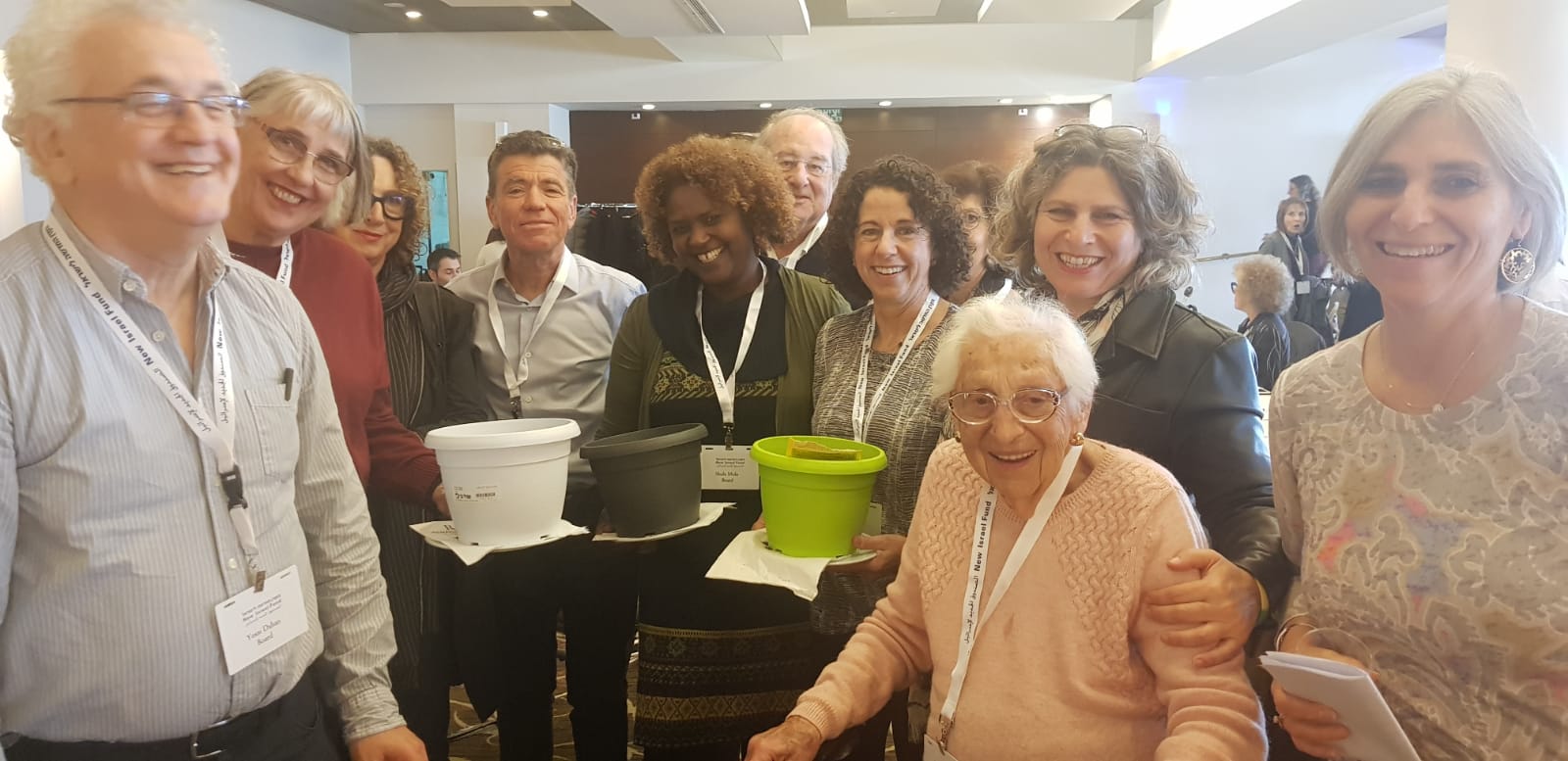 Photo: Alice Shalvi (2nd from the right) at the Boardmeeting of the New Israel Fund in Tel Aviv, February 2020. © NIF
Bet Debora
In 2000 Alice Shalvi came on her first visit to Germany since her escape in 1934. She was filled with trepidations and fears. But she found a changed Germany and could make peace with it. On this trip she also met with the founders of Bet Debora, Lara Dämmig, Monika Herweg and Elisa Klapheck, and was impressed by their enthusiasm and their vision of a renewal of Judaism in Europe after the fall of the communist regimes and of the role of women in this development. Shalvi agreed to participate in the second Bet Debora Conference, which took place in Berlin in 2001. There she got to know the richness of European Judaism. So far she had known English, Israeli and American Judaism, but no post-Holocaust European Jewish communities. She had not been aware how vibrant this Judaism was and how much creativity and energy was to be found among European Jewish women. She also came to later conferences. With her rich knowledge of Judaism, her vivacity and her enthusiasm for new ideas she was one of the mentors of Bet Debora.
Eleonore Lappin-Eppel
Just published: The new Bet Debora Journal
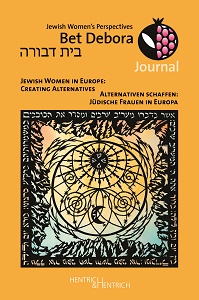
Jewish Women in Europe: Creating Alternatives / Alternativen schaffen: Jüdische Frauen in Europa
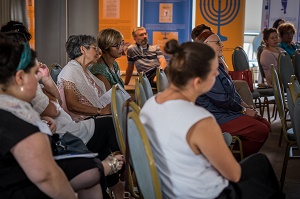
Wir laden herzlich zu einer Gesprächsrunde am Dienstag, dem 17. Dezember 2019 um 19 Uhr ein. Ort: Myer’s Hotel, Metzer Straße 26, 10405 Berlin-Prenzlauer Berg
mit: Rabbinerin Barbara Borts (Newcastle upon Tyne), Eleonore Lappin-Eppel (Wien), Ana Lebl (Split), Dragana Stojanović (Belgrad)
Moderation: Tanja Berg und Lara Dämmig (Berlin)
Die Veranstaltung findet in englischer Sprache statt.
Wir heißen alle interessierten Frauen und Männer herzlich willkommen!
– Der Eintritt ist frei –
Anschließend besteht die Möglichkeit, miteinander bei einem Glas Wein oder Wasser ins Gespräch zu kommen.
Wir bitten um Anmeldung bis 16. Dezember 2019 unter bet.debora@gmail.com
Im September 2019 fand die 9. Bet Debora Tagung in Belgrad (Serbien) statt, die dem Thema Jewish Women: Being Present, Bringing Change gewidmet war. Bet Debora und Haver Srbija haben sie gemeinsam organisiert. Haver Srbija ist eine gemeinnützige jüdische Organisation, die mit ihren Bildungsprogrammen eine pluralistische und inklusive Gesellschaft fördert und sich gegen Vorurteile, Diskriminierung, Antisemitismus und Xenophobie engagiert. In unserer Gesprächsrunde, zu der wir Referentinnen und Organisatorinnen der Tagung eingeladen haben, möchten wir uns über interessante Themen, spannende Debatten und Begegnungen austauschen.
Dragana Stojanovic gehörte dem Team von Haver Srbija an. Sie wird die Arbeit der Organisation vorstellen und darüber sprechen, welche Anstöße die Tagung für das jüdische Leben in Serbien gegeben hat.
Rabbinerin Barbara Borts spricht über die Reaktionen auf Frauenstimmen in den Synagogen im 21. Jahrhundert
Eleonore Lappin-Eppel wird die Biografie der israelischen Feministin und Friedensaktivistin Alice Shalvi (geb. 1926 in Essen) vorstellen, die die Arbeit von Bet Debora seit vielen Jahren unterstützt.
Ana Lebl wird das Wirken der Schriftstellerin und Aktivistin Ženi Lebl würdigen.
***
Rabbi Barbara Borts has served pulpits in the UK, the USA and Canada. She is an honorary research fellow in anthropology at Durham University and a research fellow of Leo Baeck College, as well as a half-complete BaalatTefilah through EAJL. She has written many articles and papers, recently researching Jews and Christmas, rabbinic roles, and the conundrum of women’s voices in Judaism. She is the co-editor, with Rabbi Elizabeth Tikvah Sarah, of Women Rabbis in the Pulpit: A Collection of Sermons. Her PhD work was on Anglo-Reform Judaism through the lens of its music.
Eleonore Lappin-Eppel ist Historikerin am Institut für Kulturwissenschaften und Theatergeschichte der Österreichischen Akademie der Wissenschaften. Sie ist Mitbegründerin der jüdischen liberalen Gemeinde Or Chadasch in Wien, Vorsitzende des New Israel Fund in Österreich und seit 2015 Vorstandsmitglied bei Bet Debora e.V.
Ana Lebl holds a BA in Near Eastern Archaeology from the University of Belgrade (Serbia) and an MLitt from the St Andrews University (Scotland, UK) in Maritime Archaeology. She lives in Split, Croatia with a husband and two daughters. Ana has been President of the Jewish Community of Split. As a Jewish volunteer and lay leader, she dedicates most of her time to organizing cultural, religious and educational events, programs and seminars. Ana also promotes interfaith and intercultural dialogue in her city.
Dragana Stojanović works in the field of cultural studies and media theories, researching the ways that media influences the everyday cultural reality and processes, as well as our notions of history, contemporaneity and future. Her particular interest involves memory studies, gender studies, (post)feminism studies, posthuman studies, traditional culture studies and the like. Currently she is working as an Assistant Professor for cultural studies and theory of art and media at the Department of Media and Communications in Belgrade. She is also active within the Jewish community of Serbia, working with the organization Haver Serbia as an educational project consultant and program facilitator.
Tanja Berg ist Politikwissenschaftlerin und arbeitet seit vielen Jahren an der Schnittstelle zwischen politischer Bildung und Forschung. Ihre Schwerpunkte liegen dabei in den Bereichen Demokratieentwicklung, Gender und Vielfalt. Sie gehört dem Vorstand von Bet Debora an.
Lara Dämmig studierte Bibliothekswissenschaft und Management von Kultur- und Non-Profit-Organisationen und arbeitet bei einer jüdischen Organisation in Berlin. Sie ist Mitbegründerin von Bet Debora.
Verkehrsverbindung: vom S-Bahnhof Alexanderplatz oder Prenzlauer Allee mit der Tram M2 bis Prenzlauer Allee Ecke Metzer Straße oder mit der U2 bis Senefelderplatz
Die Veranstaltung wird von der Senatsverwaltung für Gesundheit, Pflege und Gleichstellung – Geschäftsstelle Gleichstellung gefördert. 
Bücherspenden gesucht!
Haver Srbija möchte eine Bibliothek aufbauen. Gesucht werden Bücher in Englisch zu jüdischer Geschichte, Kultur oder Tradition. Wer gern ein Buch spenden möchte, kann uns gern per E-Mail kontaktieren bet.debora@gmail.com oder einfach das Buch zur Veranstaltung mitbringen.
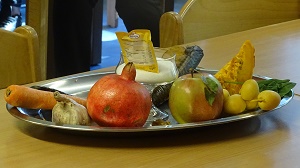
am Sonntag, dem 3. November 2019 um 14 Uhr im Hort der Lemgo-Grundschule, Müllenhoffstraße 7, 10967 Berlin
mit Ewa Alfred und
Najda Sinanyan-Erbas
Auch 2019 wollen wir unsere beliebte Reihe fortsetzen und zum 11. Mal zu einem Dialog der armenischen und jüdischen Kochkunst einladen. Ewa Alfred wird Speisen der osteuropäisch-aschkenasische Küche aus ihrer eigene Familientradition kreieren.
Unsere diesjährige Gast Najda Sinanyan-Erbas (Istanbul) kommt aus einer Familie bekannter Kochkünstlerinnen der armenischen Gemeinde. Sie wird mit uns vegane Gerichte zubereiten, die traditionell zwischen Aschermittwoch und Karfreitag gegessen werden.
Ewa Alfred (Berlin) ist Juristin und Therapeutin
Najda Sinanyan-Erbas (Istanbul) ist Wirtschaftswissenschaftlerin und Konditorin. Sie spricht Französisch, Englisch, Armenisch und Türkisch.
Unser kulturelles Rahmenprogramm wird dieses Mal von Kathleen Michael gestaltet.
Die Amerikanerin mit armenischen Wurzeln ist Performance-Künstlerin, Tänzerin und Fotografin. Sie wird über Identität und Tanz und über ihre Familiengeschichte zwischen Damaskus und Brooklyn sprechen.
Zur Deckung der Kosten bitten wir um 17 € (Ermäßigung 12 €) pro Person.
Wir bitten um Anmeldung bis 30. Oktober 2019 unter bet.debora@gmail.com oder talin.bahcivanoglu@berlin.de
Verkehrsverbindung: U7 Südstern, U8 Schönleinstraße
Wir danken Talin Bahcivanoglu und dem Hort der Lemgo-Grundschule für die Unterstützung!
Die Veranstaltung wird von der Senatsverwaltung für Gesundheit, Pflege und Gleichstellung – Geschäftsstelle Gleichstellung gefördert.
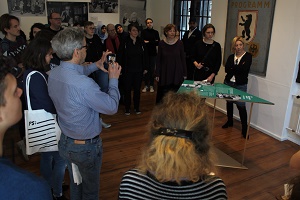
A table with photos from the first Bet Debora conference in Berlin in 1999 in the exhibition BerlinZeit on the history of the city of Berlin as part of the project “PS:___”